Float & low-iron glass
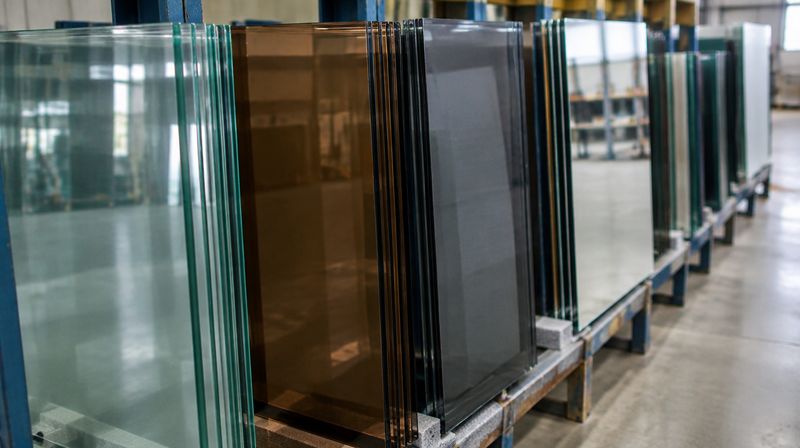
Clear annealed glass in the thicknesses that cover most joinery, cabinetry and framing work, plus low-iron where the green tint would show.
- 2mm to 12mm
- Low-iron stocked
- Cut same week
Trade supply · Wembley HA9
Float, toughened, laminated, mirror and sealed units supplied to builders, joiners, shopfitters and glaziers across London. Cut and processed here in Wembley rather than factored in from somewhere else.
No forms. Call the workshop, or email and we will come back the same working day.

What we do
The useful question for a merchant is not what is in the catalogue but what can be processed this week. Everything below is cut and worked in our own unit, which is why lead times are short and remakes are quick.
Clear annealed glass in the thicknesses that cover most joinery, cabinetry and framing work, plus low-iron where the green tint would show.
Processed and toughened here, with holes, notches and radius corners made before the furnace.
Standard, acoustic and security laminated, cut to size after manufacture so sizes are more forgiving.
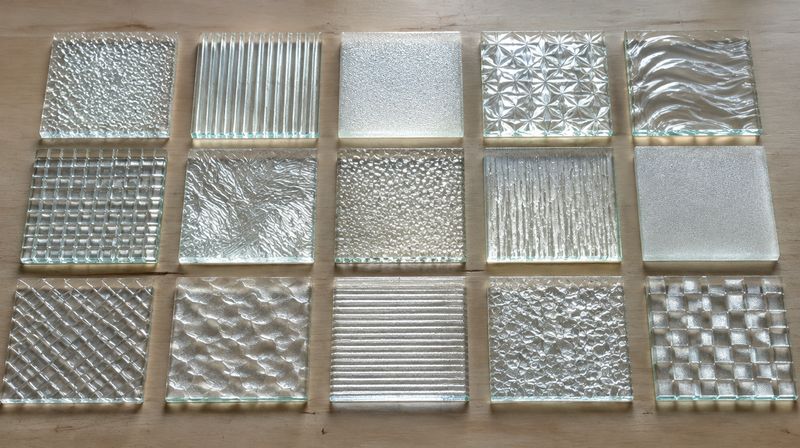
Silvered and tinted mirror, and the obscure patterns that come up most often in bathrooms and front doors.
Double and triple glazed units made to your cutting list, warm edge as standard, labelled per line.
Cutting, arrissing, grinding, polishing, bevelling, drilling and notching on glass for your own jobs.
The work
Illustrative images of the systems described above. Specification and finish are confirmed in writing with your quotation.
If you buy glass for a living you already know the pane is the cheap part. What you are paying a glass merchant in London for is accuracy on sizes, a straight answer on lead time, and someone who carries the cost when a piece comes back wrong because they misread your list. We cut, edge, polish, toughen, laminate and make up sealed units in our own workshop at 6 Atlas Road in Wembley, which means the person who prices your cutting list works in the same building as the table it gets cut on.
This page is written for the buyer rather than the homeowner. Builders, joiners, shopfitters, kitchen fitters, maintenance contractors and other glaziers whose own furnace is full. If you need to price a job, order against it, and know what day the glass lands, the rest of this explains how that actually works.
Glass starts from a square metre rate for the product, then processing is added by operation, then there is a floor under the whole thing. The floor is the part that surprises people. Every processor works to a minimum chargeable area, because a pane the size of a hardback book still takes up a cutting table, a seaming machine, a crate slot and a space in the van in much the same way a large one does. Ask for one tiny piece and you will be charged as though it were considerably bigger. That is not a merchant being awkward, it is the honest cost of handling glass.
The second thing driving price is yield. Glass arrives as large stock sheets and your list gets optimised across them. Sensible rectangles nest well and very little goes to the cullet bin. One long thin piece, one near square piece and one odd shape can waste a third of a sheet, and that waste is inside your price whether anyone itemises it or not. If you have any flexibility on a dimension, say so when you send the list. We will sometimes tell you that moving a size by twenty or thirty millimetres drops the cost, because it lets two pieces come out of the same strip.
Processing is charged by operation and not by panel. A cut piece with arrised edges is one thing. Flat ground, then flat polished, then radius corners, then two holes, then a hinge cut-out, then toughened, then back into a sealed unit, and you have stacked seven operations with seven set-ups. This is why two quotes on what looks like identical glass can be a long way apart. One has priced polished edges all round and the other has priced arrised. Read the specification line, not the total.
Toughening is the one most buyers misread. A toughening furnace is loaded as a bed, not as a pane. The oven runs the same cycle, burns the same gas and takes the same time whether it is half empty or packed tight. So the economics are about how well your pieces fill a load and whether your thickness matches what is already going through. Six pieces of 6mm clear sitting alongside someone else’s bed of 6mm clear is cheap. One sheet of thick low iron on its own is not, and no amount of pushing changes the physics. When a supplier prices toughened differently from plain cut to size, that is the reason.
If the price of a small pane looks disproportionate, you are not being overcharged. You are seeing the minimum cost of handling glass with nothing larger to hide behind.
Most remakes do not come from bad cutting. They come from a list that can be read two ways. The table cuts what is written down. If a line says 900 x 1200 and nothing says which figure is which, somebody has to decide, and on a toughened panel with a hinge cut-out that decision costs you a week.
Say what the glass is going into as well. A piece bound for a timber rebate with ten millimetres of cover can be cut tight. A piece dropping into a finished aluminium channel with four millimetres of cover needs the deduction taken off before it is cut, and you want it agreed in advance who takes it off. That is thirty seconds on the phone against a remake and a lost fitting day.
Every supplier’s product list is longer than its stock. Clear float in the common thicknesses, basic toughened, standard laminate and the usual low emissivity coating move constantly and are almost always there. Low iron, acoustic laminate, heavier toughened, fire rated, patterned, bronze and grey tints, mirror and anything coated for solar control are brought in and run on a longer clock. The useful question is never whether we can supply something. It is whether it is on the rack this week.
That single question changes how you quote. If a client has set their heart on an obscure pattern for a bathroom screen and it is a special order, the lead time belongs in your programme and in your conversation with them before you take any money. If they will accept a satin finish we hold, you could be fitting it on Friday.
Lead time is not one number. It is the sum of the processes your job needs, and every process has its own clock. Cut to size from stock with arrised or ground edges normally moves in a day or two depending on the queue. Polished edges and shaped work add a pass on a machine that is also working through everybody else’s list.
Toughening runs when there is a bed to run, so it moves in batches rather than hours. Anything that comes out of the furnace and then has to become a sealed unit has a second stage after that, because the unit is assembled, sealed and then left to cure before it is fit to travel. Put a special order sheet on the front of all that and you are talking in weeks, not days.
Nobody serious promises same day on toughened, and you should question anyone who does. What you can reasonably expect is a date you can build a programme around and a phone call the moment that date moves. The second half of that matters more than the first.
When three quotes come back on the same list and one is noticeably under the others, the gap is almost never generosity. Usually something has been read down. Arrised instead of polished. Annealed where you specified toughened. A standard float where you asked for low iron, which on a white kitchen splashback will show as a green cast at every exposed edge. Or the quote excludes delivery and you find out on the day.
Price the job on what the specification says, then look at who will stand behind it. A remake on a toughened panel with cut-outs is a week of your programme, a second visit, and a conversation with a client who no longer trusts your dates. The few pounds saved on the first order rarely survives that.
How it works
Four stages, and we tell you where you are at each one.
Trade accounts with agreed terms for regular customers. Cash sales welcome without one.
Cutting lists quoted the same working day. Width first then height in millimetres, with the specification per line.
Cut, edged and processed at HA9. We query anything inconsistent before manufacture rather than after.
Collection from Wembley during opening hours, or on a scheduled London delivery round.
Specification
Every quote states the glass build, the standards it is made to and the hardware. If a quote you are comparing does not, that is worth asking about.
Everything we sell is processed on Atlas Road in Wembley, which is why a remake is ours to sort rather than someone else's queue.
| Item | Specification |
|---|---|
| Stock range | Clear float, low-iron, toughened, laminated, acoustic laminated, security laminated, mirror in silver, bronze and grey, obscure patterns, tinted and solar control. |
| Processing on site | Cutting, arrissing, flat grinding, flat polishing, bevelling, drilling, notching, radius corners, shaped work from templates, toughening and sealed unit manufacture. |
| Tolerances | Approximately plus or minus 1mm on float and 2mm on toughened, which is the industry norm. Tell us if your application needs tighter and we will say whether it is achievable. |
| Standards & marking | Toughened to BS EN 12150 and laminated to BS EN 14449, with safety glass permanently marked. Sealed units to BS EN 1279. Documentation supplied on request. |
| Collection | 6 Atlas Road, Wembley HA9 0JH, Mon–Fri 8am–5pm. Call ahead so the order is ready and someone is free to load. |
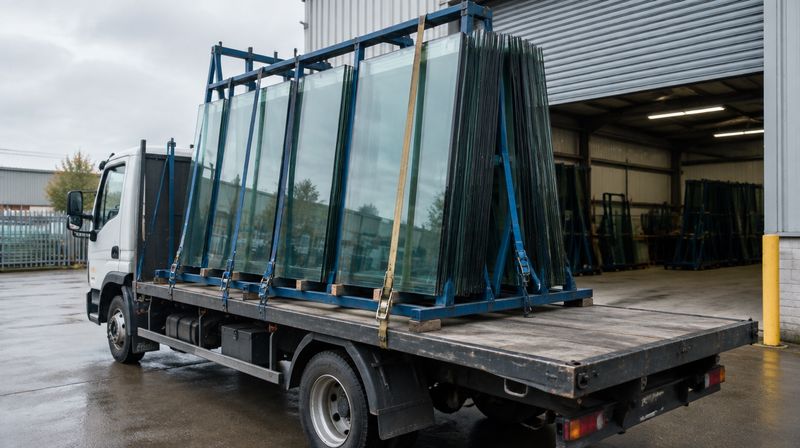
| Delivery | Scheduled rounds across London. Glass travels on edge in A-frames or crates, never flat. |
FAQ
No. Accounts suit customers ordering regularly, because they bring agreed terms and simpler ordering, but anyone can buy on a cash sale. The pricing difference reflects volume and payment terms rather than who you are.
Both, and the distinction matters when something goes wrong. A lot of merchants factor glass in from a processor and add a margin. Our cutting, edgework, drilling and toughening happen at HA9, so when a pane is damaged or a size changes, the remake is in our hands rather than in a queue at someone else's factory.
Plain float cut and polished is usually a few working days. Toughened adds furnace time, laminated depends on stock build-ups, and sealed units sit at the longer end. We confirm the lead time with the quotation rather than after you have committed to your customer.
Sometimes, for straightforward cuts in stocked thicknesses when we have capacity on the table. It is never a promise made over the phone without checking. Toughened glass is never same day, because the furnace cycle alone takes hours and the processing comes first.
If the sizes are yours, they are yours. We will query anything that looks inconsistent, and we would rather make that call than cut something we suspect is wrong, but we cannot verify a measurement we did not take. Where we survey, the sizes and the remake are ours.
A vehicle that lets the glass stand on edge, something padded to stand it against and a strap. Glass must never travel flat, because a sheet lying down flexes over every bump and that is how it breaks in transit. Bring a second pair of hands for anything large, and check the edges before you leave.
In detail
A page on each part of what we do, written to answer the question properly rather than to sell.
How to buy glass well as a trade customer: what to specify, where the money goes, and what separates a good supplier from a cheap one.
Anyone can sell you a pane of glass. This page is about the things that separate a glass trade supplier you can build a business on from one that quietly costs you money every month.
Nobody makes float glass inside London, so a search for a glass manufacturer in London returns processors and merchants. This page explains who makes what, and why the distinction only really bites when something has to be put right.
North west London holds most of the glass processing capacity in the capital. This page is about why that happened, what it changes for you on a live job, and where proximity stops mattering.
This page will not give you a rate per square metre, and you should be wary of any page that does. What it will do is show you how a trade glass price is expressed, so you can compare two of them honestly.
Glass processing in London runs in a fixed sequence, and most expensive mistakes on an order come from asking for something after the point where it was still possible. This page sets out the operations and the order they have to happen in.
As a glass merchant in Wembley we cut and process at 6 Atlas Road, HA9 0JH, and most of our trade customers collect rather than wait for a van. This page covers the physical reality of getting glass in and out of that corner of Wembley.
Coverage
We cover Greater London from our Wembley workshop, with most work in north, west and central London. See the full list of areas.
Lists quoted the same working day. Tell us the glass, the sizes and the processing and we will come back with a price and a lead time.